When you’re cold, wet, or exposed to the wind, nothing else matters much—not food, not gear, not even fire. Shelter is one of the first survival priorities, and it’s also one of the easiest skills to overlook until you need it.
This guide breaks down how to build a simple, effective survival shelter in almost any environment, using basic skills and affordable gear. It’s written for beginners, families, and anyone who wants practical knowledge—not complicated theory.
Why Shelter Comes First in a Survival Situation
Exposure can take you out fast. Wind, rain, heat loss, and extreme temperatures drain energy and judgment. A basic shelter helps you:
- Retain body heat
- Stay dry
- Block wind
- Conserve calories
- Create a safe place to rest
You don’t need a cabin. You need something that works.
The 3 Rules of a Good Survival Shelter
Before we talk materials or designs, keep these three rules in mind:
- Stay Dry – Wet equals cold, even in mild weather.
- Block Wind – Wind strips heat faster than low temperatures.
- Insulate From the Ground – The ground steals body heat quickly.
Every shelter you build should solve at least two of these problems—and ideally all three.
Choosing the Right Shelter Location
Where you build matters as much as what you build.
Look for:
- Natural windbreaks (rock walls, thick trees, terrain dips)
- High ground to avoid runoff
- Nearby materials (trees, branches, leaves)
- Safe distance from dead trees or loose rock
Avoid:
- Low spots where water collects
- Ridge tops with strong wind
- Animal trails
Simple Survival Shelter Types (Beginner Friendly)
1. Tarp Lean-To Shelter
This is one of the fastest and most versatile shelters you can build. You might already have these supplies in your bug out bag, if you followed my bug out bag checklist.
What you need:
- A tarp 6×8 or larger
- Paracord or strong cordage
- Good Quality Tent Stakes
- Two trees or anchor points
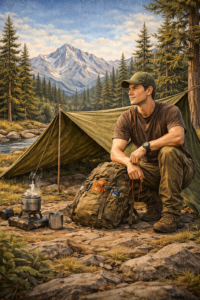
How it works: Tie the tarp at an angle between two trees, stake or weight the bottom edge, and face the open side away from the wind.
2. A-Frame Tarp Shelter
An upgrade from the lean-to, this gives better wind and rain protection. Again, you likely already have these supplies in your bug out bag.
What you need:
Why it’s good:
- Better coverage
- Works in rain or light snow
- Easy to adjust
3. Natural Debris Shelter
If you have no tarp, nature still provides. This is a great option if you have no supplies with you.
What you need:
- A sturdy ridge pole
- Branches
- Leaves, pine needles, grass
Pile debris thick—at least 1–2 feet deep—to trap heat.
Skill note: this takes time and energy, but it works when built correctly.
Insulating the Ground (Don’t Skip This)
Even the best shelter fails if you lie directly on the ground.
Use:
- Pine boughs
- Leaves
- Grass
- A sleeping pad or emergency blanket
Shelter Gear Worth Carrying in a Bug-Out Bag
A few lightweight items make shelter building faster and safer:
- Tarp (silnylon or heavy-duty)
- Paracord or bank line
- Metal stakes
- Emergency bivy or blanket
- Compact folding saw
You don’t need all of it—but each piece buys you time and comfort.
Shelter Mistakes Beginners Make
- Building too big (harder to heat)
- Ignoring wind direction
- Skipping ground insulation
- Waiting until dark or rain starts
Build early. Adjust later.
Practice This Before You Need It
Shelter building is a skill—not something you want to try for the first time in bad weather. Practice in your backyard, on a camping trip, or during a day hike.
The confidence matters as much as the shelter itself.
Final Thoughts
You don’t need expensive gear or advanced training to build a survival shelter. You need awareness, a few basic skills, and the willingness to practice.
When things go sideways, shelter buys you time—and time buys you options.
Follow this link back to our homepage and explore other survival skills and get gear reviews.